
History of Al-Aqsa Mosque: A Timeline from the Prophets to the Ottomans
Al-Aqsa Mosque history at a glance
| c. 40 years after the Kaaba | Established as a place of worship (Bukhari 3366) |
|---|---|
| 637-638 CE | Umar ibn al-Khattab enters Jerusalem; a simple prayer house is built |
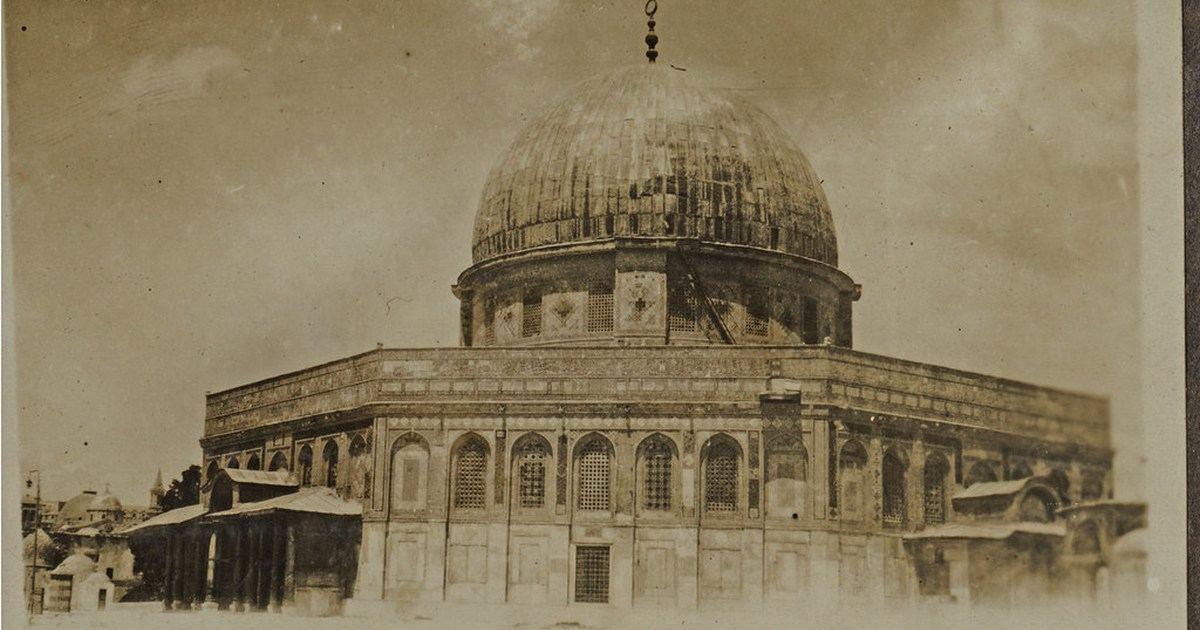
| 691-692 CE | Abd al-Malik completes the Dome of the Rock |
| c. 705-715 CE | The Umayyad Qibli mosque is built (usually credited to al-Walid I) |
| 746 CE | Earthquake; rebuilt by al-Mansur (c. 758) and enlarged by al-Mahdi (c. 780) |
| 1033-1035 CE | Earthquake; Fatimid caliph al-Zahir rebuilds the mosque |
| 1099-1187 CE | Crusader period; Salah al-Din restores the mosque and installs Nur al-Din's minbar |
| 1250-1517 CE | Mamluk schools, fountains and most of the minarets |
| 1537-1566 CE | Suleiman the Magnificent rebuilds the city walls and retiles the Dome of the Rock |
| 2007 CE | A replica of Nur al-Din's minbar, lost in the 1969 fire, is installed |
Al-Aqsa Mosque has been rebuilt more often than almost any mosque in Islam. Earthquakes brought it down at least three times, and each dynasty that ruled Jerusalem left something on it. This page follows the history of Al-Aqsa Mosque era by era, from the hadith about its foundation to the Ottoman restorations. If you only want the dates of construction and its age, there is a shorter answer in when was Al-Aqsa Mosque built.
What "Al-Aqsa" Means
The name comes from the Quran. Surah al-Isra (17:1) speaks of the Night Journey "from al-Masjid al-Haram to al-Masjid al-Aqsa", and al-Aqsa means "the farthest". In Islamic usage the name covers the whole walled compound of about 144 dunams (roughly 14 hectares), also called al-Haram al-Sharif. The Qibli mosque with the grey dome at the southern end and the Dome of the Rock with the golden dome in the centre are both inside it.
The Prophetic Roots - The Second Mosque on Earth
Abu Dharr al-Ghifari (RA) said: "I asked: O Messenger of Allah, which mosque was first established on earth? He said: Al-Masjid al-Haram. I asked: Then which? He said: Al-Masjid al-Aqsa. I asked: How long between them? He said: Forty years." (Bukhari 3366, Muslim 520).
The hadith places Al-Aqsa as a place of worship long before any building that stands today; scholars differ on who first laid its foundation. A separate hadith mentions that Sulayman (peace be upon him) built Bayt al-Maqdis and asked Allah for three things when he finished (Nasa'i 693, Ibn Majah 1408).
The Islamic Conquest - Umar Enters Jerusalem (637-638 CE)
Historical accounts report that Patriarch Sophronius agreed to hand over Jerusalem on condition that the Caliph come in person, and that Umar ibn al-Khattab (RA) arrived taking turns with his servant on one camel. The accounts also say that when prayer time came at the Church of the Holy Sepulchre he prayed outside, so that Muslims would not later claim the church as a mosque.
The Covenant of Umar is attributed to him in these accounts, granting the people of Jerusalem safety for their lives and churches. He is reported to have gone to the site of Al-Aqsa, which had been left neglected, helped clear it, and ordered a simple mosque built there. A Christian pilgrim named Arculf described a large, plain timber prayer house on the site a few decades later.
The Umayyad Era - The Dome of the Rock and the Qibli Mosque
In 691-692 CE (72 AH), Caliph Abd al-Malik ibn Marwan completed the Dome of the Rock over the Rock. Its inner arcade carries Quranic inscriptions, and the date 72 AH is written in the building itself. The golden dome that appears in most photos of Jerusalem is this building, not the main prayer hall, and the two are often confused.
The Qibli mosque, the long prayer hall with the grey lead dome at the southern end of the compound, was built under the Umayyads between about 705 and 715 CE. Most historians credit Caliph al-Walid I (ruled 705-715); some argue that his father Abd al-Malik began it and al-Walid finished it. A single year such as 709 CE, which many websites quote, is a convention rather than a documented date.
Earthquakes and Rebuilding - The Abbasids and Fatimids
The earthquake of 746 CE brought down much of the Umayyad building, and the Abbasid caliph Abu Ja'far al-Mansur rebuilt it around 758 CE. After another earthquake, the Abbasid caliph al-Mahdi rebuilt and enlarged it around 780 CE.
In 1033 CE a powerful earthquake struck Jerusalem again. The Fatimid caliph al-Zahir li-I'zaz Din Allah rebuilt the mosque, with the work completed around 1035 CE. The Fatimid rebuild was narrower than the Abbasid mosque, and much of the layout you see today goes back to it.
The Crusaders and Salah al-Din (1099-1187)
When the Crusaders took Jerusalem in 1099 CE, the mosque was used as a royal palace and later as the headquarters of the Knights Templar. In 1187 CE Salah al-Din (Saladin) retook the city, restored the building as a mosque, and installed the minbar that Nur al-Din Zangi had commissioned in Aleppo. That minbar was destroyed in a fire at the mosque in 1969; a faithful replica was installed in 2007.
The Mamluks (1250-1517) - Schools, Fountains and Minarets
The Mamluks surrounded Al-Aqsa with religious schools, fountains and lodges, including the Tankiziyya and Ashrafiyya schools that still stand. Most of the compound's four minarets date from this period. For two and a half centuries the sanctuary worked as a centre of teaching as well as worship.
The Ottomans (1517-1917) - Walls and Tiles
Sultan Suleiman the Magnificent (ruled 1520-1566) rebuilt the walls of Jerusalem that stand today and ordered the outside of the Dome of the Rock covered with the coloured ceramic tiles it still wears. The mosque was damaged in the 1837 earthquake and repaired by the Ottomans in the following decades.
Each era added a layer, and the purpose stayed the same: a place Muslims turn their hearts to from every corner of the earth.
Al-Aqsa Today - And Connecting with It from Afar
Al-Aqsa today is a walled sanctuary of about 144 dunams, administered by the Islamic Waqf in Jerusalem, with the Qibli mosque, the Dome of the Rock, and dozens of smaller domes, arches, schools and fountains inside its walls.
For Muslims who cannot travel there, Al-Aqsa Blessings offers a personal du'a made by name at Al-Aqsa Mosque, with the video usually sent by email within 48-72 hours.
Frequently Asked Questions About the History of Al-Aqsa Mosque
What is the difference between Al-Aqsa Mosque and the Dome of the Rock?
Al-Aqsa Mosque is the name of the whole walled sanctuary. The Dome of the Rock is a building inside it, completed in 691-692 CE over the Rock. The main prayer hall, the Qibli mosque with the grey dome at the southern end, was built about 705-715 CE. Many people confuse the two because the golden dome is the one in most photos.
Which caliph rebuilt Al-Aqsa Mosque after the earthquake?
Several did. After the earthquake of 746 CE, the Abbasid caliph al-Mansur rebuilt it, and al-Mahdi rebuilt and enlarged it again around 780 CE. After the earthquake of 1033 CE, the Fatimid caliph al-Zahir rebuilt it, completing the work around 1035 CE.
Who built Al-Aqsa Mosque?
As a place of worship, the hadith dates it forty years after the Kaaba, and scholars differ on who first founded it; a hadith mentions Sulayman (peace be upon him) building Bayt al-Maqdis. The present Qibli mosque was first built by the Umayyads, usually credited to al-Walid I, and rebuilt by the Abbasids and the Fatimids. More detail is in when was Al-Aqsa Mosque built.
Why is Al-Aqsa important in Islam?
It was the first qibla, it is the destination of the Night Journey in Surah al-Isra, and it is one of the three mosques the Prophet (peace be upon him) encouraged Muslims to travel to (Bukhari 1189, Muslim 1397). See the importance of Al-Aqsa Mosque.
Keep Reading
The history of Al-Aqsa is tied to the prophets and to the Night Journey. To continue, see Prophets in Palestine and The Night Journey.
Request Your Personal Du'a from Al-Aqsa Now
Get a personal du'a video delivered within 48-72 hours
Request Now