
Etiquette of Du'a and Conditions of Acceptance - How to Make Your Prayer Answered by Allah
Not every du'a is answered in the way its maker expects, not because Allah does not hear, for He is the All-Hearing, the All-Knowing, but because du'a has etiquette and conditions. Those who master this etiquette do not knock on a locked door; they knock with the right key. The Prophet (peace be upon him) said: "Du'a is worship" (Tirmidhi, Abu Dawud, Ibn Majah), just as prayer has its pillars and conditions, du'a too has its secrets and gateways.
First: Sincerity - The Essential Condition Without Which Du'a Cannot Stand
Sincerity is not merely an intention, it means your whole heart is with Allah in the moment of du'a. You are not thinking of another person, not calling to please others, not praying while your mind is elsewhere. Allah says: "So invoke Allah, [being] sincere to Him in religion" (Qur'an 40:14). Sincerity is directly linked to du'a in the Quran itself.
The sign of sincerity in du'a: feeling broken before Allah, sensing your true need for Him.
Second: Certainty of Being Answered - Do Not Call While Your Heart Is Heedless
Abu Hurairah reported that the Prophet (peace be upon him) said: "Call upon Allah while certain of being answered, and know that Allah does not answer a du'a from a heedless, distracted heart." (Jami' at-Tirmidhi 3479; graded hasan by al-Albani, weak by others). Certainty of response is not arrogance - it is faith in the vastness of Allah's mercy and generosity, and that He does not disappoint those who turn to Him.
Third: Lawful Food, Drink and Clothing
The Prophet (peace be upon him) mentioned the man who travels far, disheveled and dusty, stretching his hands to the sky: "O Lord, O Lord!" while his food is unlawful, his drink is unlawful, his clothing is unlawful, and he has been nourished with the unlawful - "so how can he be answered?" (Muslim, from Abu Hurairah).
The hadith warns against what is unlawful in food, drink and clothing. This is where self-examination begins, before raising your hands.
Fourth: Times of Acceptance - The Hours When the Door Opens Wide
Du'a has favored times that appear in sound texts, gathered in authentic hadith on the best times for du'a:
Prostration, the Prophet (peace be upon him) said: "The closest a servant comes to his Lord is when he is prostrating, so increase your du'a." (Muslim). You are at your lowest physical point and highest spiritual point simultaneously.
The last third of the night, "Our Lord descends every night to the lowest heaven when the last third of the night remains and says: Who calls upon Me that I may answer him?" (Bukhari, Muslim). This is a direct divine call, who would leave such a call unanswered?
Between the adhan and iqama, the Prophet (peace be upon him) said: "Du'a is not rejected between the adhan and iqama." (Abu Dawud, Tirmidhi). These few minutes before every prayer, a treasure most people waste.
The hour of acceptance on Friday, "In Friday there is an hour where no Muslim servant stands in prayer asking Allah for something except that He gives it to him." (Bukhari, Muslim).
Fifth: Etiquette That Prepares the Heart and the Setting
Begin with praise of Allah then send blessings on the Prophet, the Prophet (peace be upon him) said: "When one of you prays [makes du'a], let him begin by glorifying his Lord and praising Him, then send blessings on the Prophet, then supplicate with what he wishes." (Tirmidhi, Abu Dawud, Nasa'i).
Raise your hands, for the Prophet (peace be upon him) said: "Indeed your Lord is Shy and Generous (Hayiyy Karim); He is shy, when His servant raises his hands to Him, to return them empty." (Sunan Abi Dawud 1488, graded sahih by al-Albani).
Repeat the du'a three times: when the Prophet (peace be upon him) made du'a, he made it three times, and when he asked, he asked three times (Muslim).
Supplicate with humility and lowness of voice, "Call upon your Lord in humility and privately; indeed, He does not like transgressors." (Qur'an 7:55)
Sixth: Du'a from Blessed Land
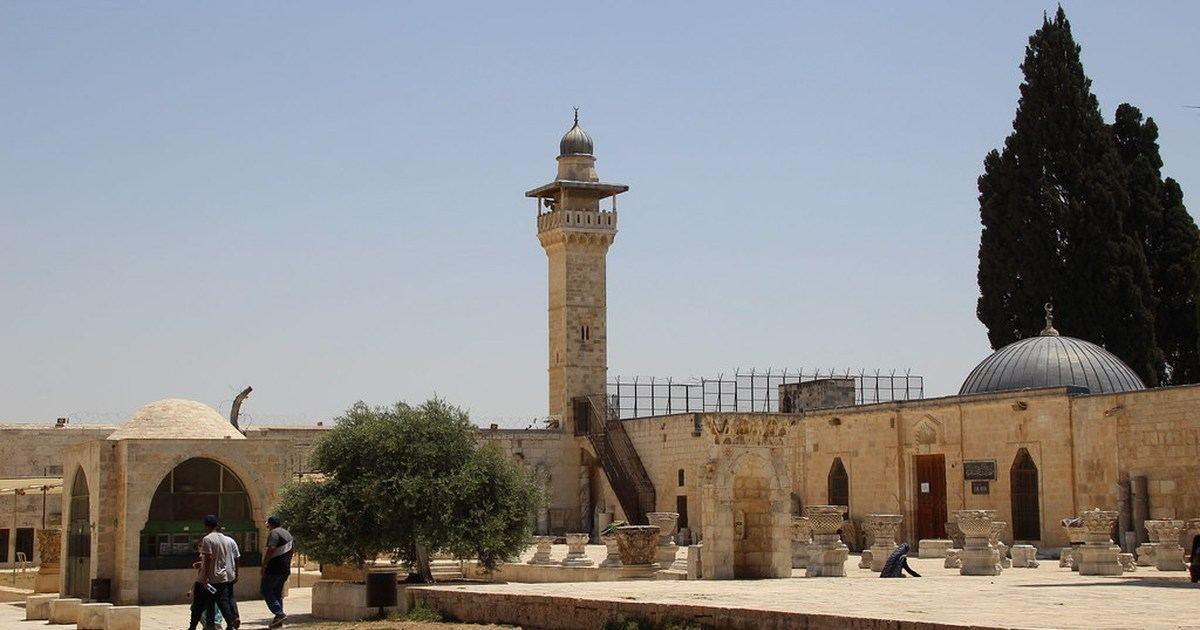
Calling upon Allah is not merely a geographical shift; it is a du'a raised from a mosque whose surroundings Allah described as blessed (Qur'an 17:1). The Prophet (peace be upon him) led a group of the prophets in prayer in this place (Muslim). We ask Allah for acceptance; the answer is in His hands alone.
Al-Aqsa Blessings makes this possible: a personal du'a delivered as a video, observing all proper etiquette, and sent to you within 48-72 hours.
Frequently Asked Questions About Du'a Etiquette
Must I be in a state of wudu when making du'a?
Wudu is not a condition for du'a to be valid, but it is recommended etiquette that prepares the heart. Being in full ritual purity is always better.
Is du'a always answered with exactly what I asked for?
Allah answers du'a in three ways: He gives you what you asked for, or He averts a harm from you in exchange, or He saves it for you in the Hereafter. The Prophet said: "There is no Muslim who calls upon Allah with a du'a that contains no sin or severing of kinship except that Allah grants him one of three things." (Ahmad)
Does the location affect du'a acceptance?
We have not found a sound text that ties the answer to a particular place; the answer is in Allah's hands alone. Allah has described the surroundings of Al-Aqsa as blessed (Qur'an 17:1), and we ask Him for acceptance.
Du'a is art and spirit, not formulas recited without awareness. When you combine sincerity, proper etiquette, the right time, and blessed ground, you are not merely knocking on the door, you are certain it is open.
Request Your Personal Du'a from Al-Aqsa Now
Get a personal du'a video delivered within 48-72 hours
Request Now