Why Al-Aqsa Mosque Is Every Muslim's Concern — Religious, Spiritual and Historical Significance
When Jerusalem is mentioned, a cause is mentioned with it. When Al-Aqsa Mosque is mentioned, a duty comes with it. This place is not merely a geographical site or historical structure — it is a point of intersection between heaven and earth, between past and future, between all prophets from Adam to Muhammad, peace be upon them all. Understanding the importance of Al-Aqsa Mosque is not a cultural luxury — it is an obligation upon every Muslim who wants to understand their religion.
First: Al-Aqsa Mosque in the Holy Quran — Direct Divine Description
Al-Aqsa Mosque is mentioned explicitly in Surah Al-Isra: "Exalted is He who took His Servant by night from al-Masjid al-Haram to al-Masjid al-Aqsa, whose surroundings We have blessed." This direct Quranic description — "whose surroundings We have blessed" — carries a clear religious ruling: the blessing is described comprehensively, meaning it extends to everything around it, not a limited radius.
In Surah Al-Anbiya, the description recurs: "And We delivered him and Lot to the land which We had blessed for all peoples" — "for all peoples" means this land's blessing is universal, not exclusive to its inhabitants alone.
Second: Al-Aqsa as the First Qibla — The Significance of Honor, Not Abrogation
Seventeen months — that is how long the Prophet (peace be upon him) and his companions prayed facing Al-Aqsa Mosque after the migration to Medina. This direction was not arbitrary; it was divine honor for the place and confirmation of its status. When the qibla changed to the Kaaba, the verse said: "We have certainly seen the turning of your face toward the heaven, and We will surely direct you to a qibla with which you will be pleased." The change came in response to the Prophet's longing — not as a diminishment of Al-Aqsa.
A point of jurisprudence: "First qibla" does not mean "abrogated qibla" — it means the qibla that preceded all others and was honored by Allah before any other.
Third: The Station of Isra and Mi'raj — Why Jerusalem Specifically?
Allah could have taken His Prophet directly from Mecca to the heavens. But He chose Jerusalem as the midpoint — and in that choice lies profound wisdom: uniting both qiblas in a single journey, and declaring that the chain of prophethood is unbroken.
At Al-Aqsa Mosque, the Prophet (peace be upon him) led all the prophets in prayer — from Adam to Jesus, peace be upon them. This prayer was not merely a gathering; it was a formal declaration that Muhammad is the Sealing Imam, and that his concluding message encompasses and perfects all that preceded it.
Fourth: Al-Aqsa and the Prophets — An Accumulated Spiritual Inheritance
Dozens of prophets are connected to this blessed land:
Ibrahim (Abraham) migrated to it from Iraq and built the first house of worship at its site.
Dawud (David) ruled there and received the Psalms.
Sulayman (Solomon) built there with divine wisdom.
Zakariyya, Yahya, and Maryam (Zechariah, John, and Mary) lived their sacred lives in its bounds.
Isa (Jesus) was born in Bethlehem and was raised from Jerusalem.
This prophetic accumulation makes Al-Aqsa the living "Museum of Prophets" — a land that never separated from the heavens for a single moment since the beginning of history.
Fifth: Al-Aqsa and the Axis of the Hereafter
Narrations indicate that the land of resurrection on the Day of Judgment will be in the Levant, with Jerusalem at its center. This meaning adds to Al-Aqsa a doctrinal dimension that transcends present and history to reach what lies beyond this worldly life.
Sixth: Connecting with Al-Aqsa Without Traveling — The Personal Du'a Service
Not every Muslim is able to travel to Jerusalem — but every Muslim is capable of connecting with Al-Aqsa spiritually. Al-Aqsa Blessings offers you a personal du'a delivered as a video within 48-72 hours. This prayer is prepared with complete du'a etiquette.
Frequently Asked Questions About the Importance of Al-Aqsa
Why does Al-Aqsa matter to all Muslims, not just Palestinians?
Because the Quran described it as blessed "for all peoples" — not for any particular region. Just as the Kaaba is the qibla of every Muslim anywhere on earth, Al-Aqsa Mosque is the concern of every Muslim who affirms the Quran and believes in the history of the prophets.
What is the difference between the Dome of the Rock and Al-Aqsa Mosque?
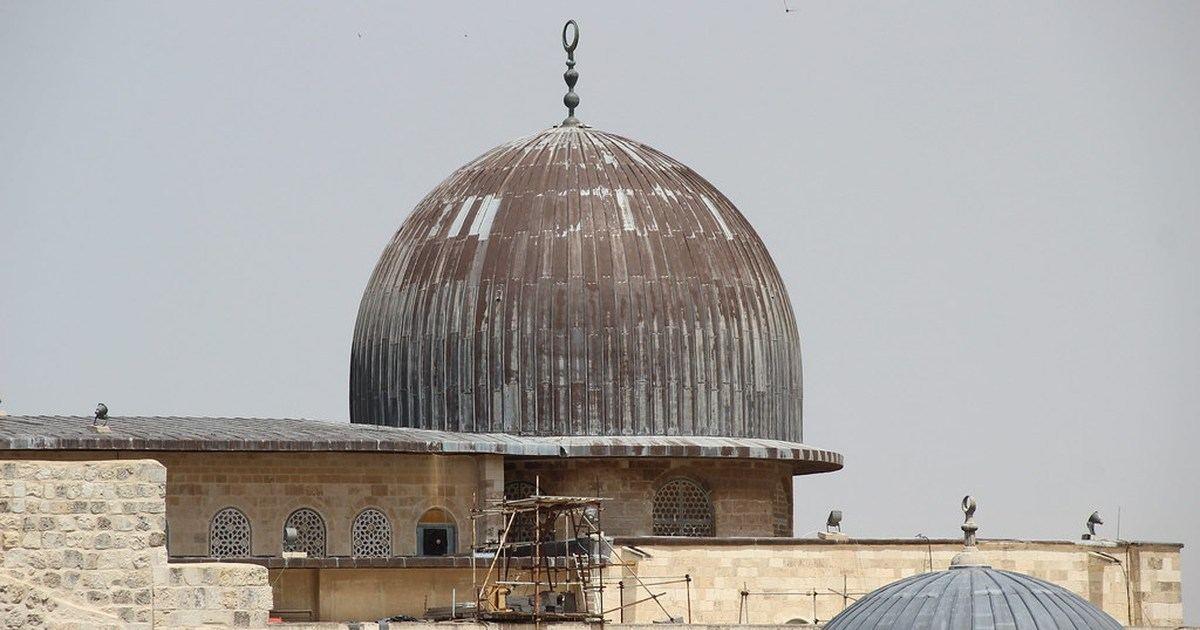
Al-Aqsa Mosque is the complete Islamic religious complex on the Temple Mount in Jerusalem, covering 144 dunams. The Dome of the Rock is the famous golden building within this complex, built by the Umayyad Caliph Abd al-Malik ibn Marwan in 72 AH over the Rock from which the Prophet (peace be upon him) ascended to the heavens.
How can I connect with Al-Aqsa while in my own country?
Through prayer and supplication for its liberation, learning about its history, and supporting organizations that serve it. Through the Al-Aqsa Blessings service, you can receive a personal du'a prepared with care, helping you feel spiritually connected even while far away.
Al-Aqsa Mosque is not a political issue or a land dispute — it is a shared prophetic inheritance for all who believe in Allah, the Last Day, and the prophethood of Muhammad (peace be upon him). Whoever understands this understands why this place remains in the heart of every Muslim.
Request Your Personal Du'a from Al-Aqsa Now
Get a personal du'a video delivered within 48-72 hours
Request Now