
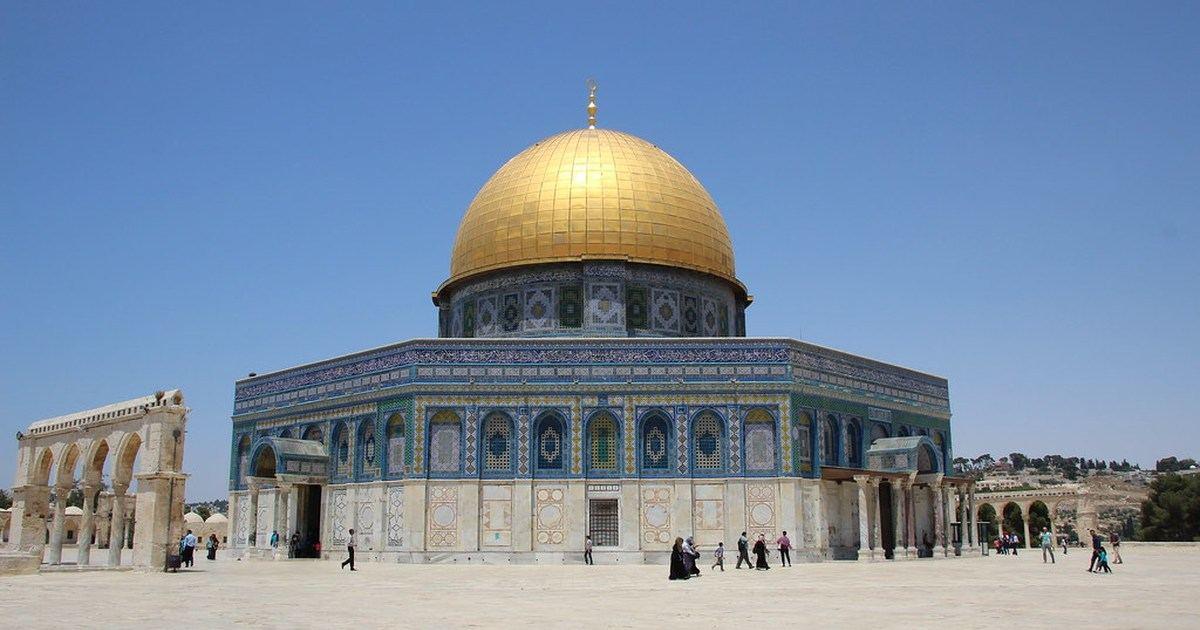
Isra and Mi'raj — The Night That Changed Human History
That night, the Prophet Muhammad (peace be upon him) was deep in grief. His wife Khadijah had died, his uncle Abu Talib who protected him was gone, and the people of Taif had driven him away with stones. The sky felt as if it had closed its doors. Then that night came — to prove that whom Allah chooses, hardship cannot keep him down.
The Isra: From Mecca to Jerusalem in a Moment
Gabriel (peace be upon him) came and opened the Prophet's chest, washing it with Zamzam water and filling it with faith and wisdom — spiritual preparation for what no eye had seen nor ear had heard. The Buraq was brought: a white mount whose stride reaches where its gaze falls. The Prophet (peace be upon him) mounted it with Gabriel and they set off.
What a caravan from Mecca would take seven days to reach Medina, the Buraq covered in moments. The Prophet arrived at Al-Aqsa Mosque and tied the Buraq at the ring where prophets had tied their mounts at the mosque gate.
Leading All Prophets in Prayer at Al-Aqsa
Inside the Noble Sanctuary, something occurred that had never happened in human history before or since: all the prophets were gathered — from Adam to Jesus — and Muhammad (peace be upon him) led them in prayer as their imam. Ibrahim the Khalil, Musa the Kalimullah, Isa the Ruh of Allah — all behind the Seal of Prophets. This was not merely a prayer; it was a divine declaration of the finality of prophethood and the supremacy of Muhammad (peace be upon him) over all prophets.
This single event alone explains why Al-Aqsa Mosque is not just a mosque — it is the place Allah chose as the gathering point of all His prophets on the greatest night the earth has ever known.
The Mi'raj: From the Rock to Sidrat al-Muntaha
From the Blessed Rock — located today beneath the Dome of the Rock — the Prophet (peace be upon him) ascended through the seven heavens. In each heaven a prophet welcomed him:
- First heaven: Adam, father of humanity
- Second: Jesus and John, sons of the maternal aunt
- Third: Joseph, possessor of beauty and patience
- Fourth: Enoch (Idris), raised to a high station
- Fifth: Aaron, brother of Moses
- Sixth: Moses, who wept seeing that Muhammad's nation would enter Paradise in greater numbers than the Children of Israel
- Seventh: Ibrahim, leaning his back against the Frequented House (al-Bayt al-Ma'mur)
Then the Prophet (peace be upon him) passed Sidrat al-Muntaha — the point beyond which no creature passes, no angel, no prophet. There he heard the scratching of the Pens writing the destinies of creation, and saw Paradise and Hell.
Prayer: The Gift of Isra and Mi'raj to Believers
At the highest point ever reached by any human or angel, the five prayers were prescribed. They were fifty. The Prophet descended and Moses (peace be upon him) prompted: "Go back and ask for reduction — your nation cannot bear it." The Prophet returned repeatedly until they became five in practice, fifty in reward. This reduction is not leniency — it is Allah's mercy distributed with a generosity only He knows the bounds of.
Prayer alone among the pillars of Islam was not prescribed on earth — it was received in the heavens, on the Night of Isra and Mi'raj, showing its singular, exceptional status.
The Return and the Quraysh's Reaction
The Prophet returned the same night. He told the Quraysh — they laughed and disbelieved. They tested him about Jerusalem's details, which he had never visited before. He described its gates and the count of its columns with precision that could not err, because Allah had shown him Al-Aqsa Mosque as he described it. Abu Bakr al-Siddiq (RA) said: "If he said it, then he has spoken the truth" — and with that sentence he earned his title "al-Siddiq" until the Day of Judgment.
The Deepest Lesson: When Earth Grows Narrow, Heaven Opens
The Isra and Mi'raj did not occur in times of victory and ease — they occurred in the Year of Grief, after losses and rejection. Allah's message to His Prophet was: the more the earth constricts around you, the closer you are to Us.
Al-Aqsa was the earthly station of that journey. That is why prayer there carries 500 times the reward — because every prayer within it carries the memory of that night and that great imamate. Cannot reach it? Request a personal du'a from Al-Aqsa — delivered to you wherever you are.
Frequently Asked Questions About Isra and Mi'raj
Was the Isra and Mi'raj in body or in spirit?
The majority of scholars hold that it was in both body and spirit while awake — which is the more apparent meaning of the Quran. Allah's words "with His servant" encompass both body and soul. Had it been only in spirit, the Quraysh would not have disbelieved him — for visions are not considered remarkable.
Why did Allah choose Al-Aqsa Mosque as the stop for the Isra?
To honor Al-Aqsa and show the connection between the Grand Mosque and Al-Aqsa, and for the Prophet to lead the prophets in prayer there, declaring the finality of prophethood. And to link Islam to all the divine messages that preceded it.
When did the Isra and Mi'raj occur?
It occurred in the eleventh year of the Prophetic mission — approximately one to three years before the Hijra to Medina. There is scholarly disagreement on the exact month and year, but it is established that it was in Mecca before the Hijra.
Why this night still matters
The Isra and Mi'raj are not only a historical event; they carry a lasting message about patience after grief, relief after hardship, and the special place of Al-Aqsa Mosque in Islam. Readers return to this story when they want a clearer understanding of the relationship between Mecca, Jerusalem, and prayer.
To explore the bigger picture, read The Importance of Al-Aqsa Mosque, The Virtues of Prayer, and How to Request Du'a from Al-Aqsa. Together they complete the spiritual and practical lesson of this blessed night.
What the reader should take away
- Hardship does not mean that divine care is absent.
- Prayer is not an ordinary ritual; it is a heavenly gift.
- Al-Aqsa is a living part of Islamic prophetic history.
Bottom line
If you came searching for the meaning of Isra and Mi'raj, the wider answer is that Allah raises whom He wills among His servants, and that Al-Aqsa remains a witness to the great meeting between the prophets and the Seal of the Prophets (PBUH).
Request Your Personal Du'a from Al-Aqsa Now
Get a personal du'a video delivered within 48-72 hours
Request Now