
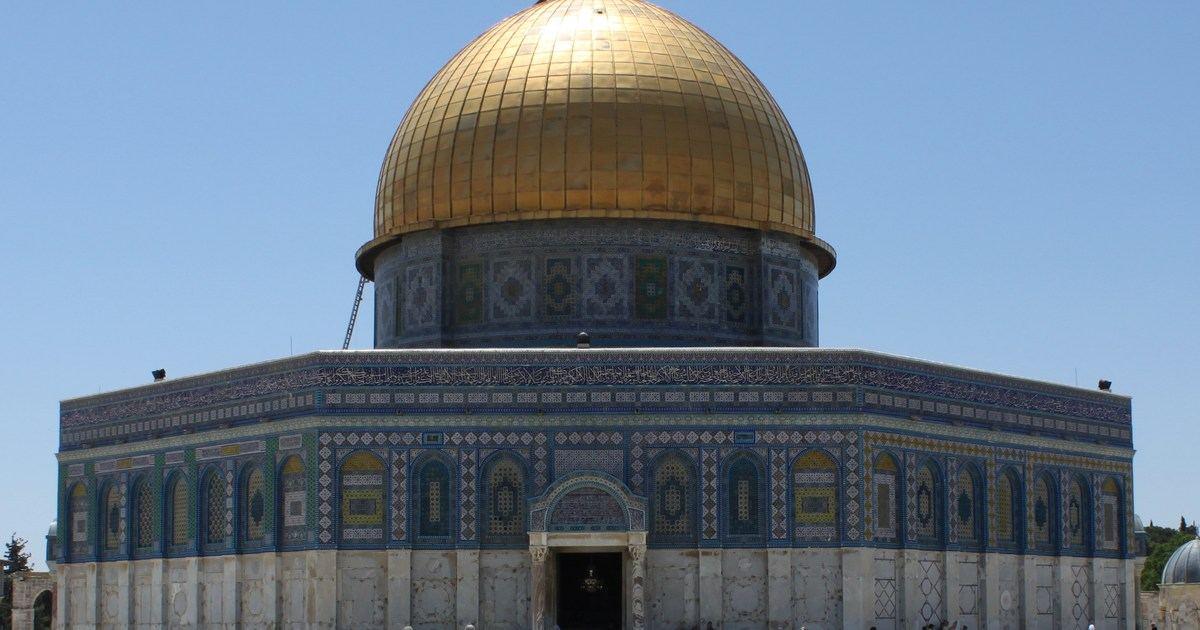
The Virtues of Prayer at Al-Aqsa Mosque — Multiplied Reward and Its Spiritual Secrets
Five hundred prayers in two rak'ahs — that is what the prophetic hadith means about the virtue of prayer at Al-Aqsa Mosque. But the true virtue is deeper than mere numbers. Prayer at Al-Aqsa Mosque is not simply an act of worship with a multiplied reward — it is a moment in which you stand on the very ground trodden by the feet of the prophets, completing rak'ahs that Ibrahim and Muhammad, peace be upon them, began.
First: The Hadith Text — The Numbers and Their Significance
The hadith specifying the numerical virtue of prayer at Al-Aqsa Mosque was narrated by Abu Dharr al-Ghifari (RA): "Prayer in the Grand Mosque is worth one hundred thousand prayers, prayer in my mosque is worth one thousand prayers, and prayer in Al-Aqsa Mosque is worth five hundred prayers."
This three-part sequence is not merely a ranking of sanctity — it is evidence that Al-Aqsa Mosque is a partner in the divine system of the best places on earth. Five hundred times means that a single hour of prayer at Al-Aqsa equals more than twenty days of continuous prayer in any other mosque on earth.
Second: Why This Specific Virtue? — The Logic of Divine Multiplication
Multiplication in Islam does not come randomly — it is tied to clear reasons:
Spatial blessing: Allah directly described the land of Al-Aqsa Mosque as blessed in the Quran. Direct divine blessing means that every act performed in this place is multiplied.
Prophetic inheritance: Every prayer performed at Al-Aqsa is added to a record of worship stretching thousands of years. The earth itself has "learned" reverence, revelation, and turning toward Allah.
The Prophet's choice of this place: On the Night of Isra, had the Prophet prayed alone at Al-Aqsa it would have been enough to honor it forever. But he prayed as imam to all the prophets — that sacred prayer left a spiritual imprint on the walls of the mosque that cannot be erased.
Third: Prayer at Al-Aqsa and the Great Imamate Prayer
The night on which the Prophet (peace be upon him) led all the prophets in prayer at Al-Aqsa has deep jurisprudential dimensions:
First — all the prophets lined up behind him, meaning their prayer was behind their imam at Al-Aqsa. A mosque that Allah chose as the gathering place for all messengers in a single prayer — this honor has no parallel.
Second — whoever prays at Al-Aqsa today prays in the place where Adam, Ibrahim, Moses, and Jesus stood in rows. The place does not forget.
Fourth: The Virtue of Du'a at Al-Aqsa — A Complementary Dimension to Prayer
Prayer and supplication at Al-Aqsa Mosque are two faces of the same coin. Whoever prays then extends their du'a after the prayer has combined the highest forms of worship in the most honored place. Every du'a raised from this place comes carried by the weight of prophetic history.
For those who cannot reach Jerusalem, Al-Aqsa Blessings offers a personal du'a delivered as a video within 48-72 hours. This is not a substitute for visiting, but a way to connect your heart to this place until the opportunity to visit arises.
Fifth: Does the Virtue Apply to Du'a As Well?
The virtue mentioned in the hadiths speaks specifically about prayer. But scholars have derived from the concept of "spatial blessing" that every act of worship performed at Al-Aqsa Mosque — prayer, supplication, recitation, and remembrance — benefits from the blessing of the place. Ibn Taymiyyah and other scholars indicated that a blessed place adds a preferential quality to the worship performed within it over what is performed elsewhere.
Frequently Asked Questions About the Virtue of Prayer at Al-Aqsa
Does the five hundred prayers virtue apply to every prayer I perform at Al-Aqsa?
Yes — the hadith did not restrict the virtue to a specific prayer; it mentioned "prayer" in absolute terms. Every rak'ah performed at Al-Aqsa Mosque carries this great virtue, whether obligatory or voluntary.
Is the virtue of prayer at Al-Aqsa still valid despite the difficulty of accessing it?
Yes — and the difficulty itself may increase the reward. The Prophet (peace be upon him) said: "The best prayer with Allah is Fajr prayer on Friday in congregation." Reward multiplies with effort. One who reaches Al-Aqsa despite obstacles carries a multiplied reward on top of the prayer's own virtue.
Can the virtue of the prayer be transferred to another person?
One can pray for another person to receive similar virtue, and the reward of worship can be gifted to the deceased as scholars have permitted. Al-Aqsa Blessings allows you to request a personal du'a for a loved one, raised with care.
Prayer at Al-Aqsa Mosque is not merely multiplied good deeds in the record — it is a spiritual experience that rearranges priorities. Whoever prays at Al-Aqsa returns having been changed in some way within — because they stood where the prophets stood, and prostrated where they prostrated.
Request Your Personal Du'a from Al-Aqsa Now
Get a personal du'a video delivered within 48-72 hours
Request Now