
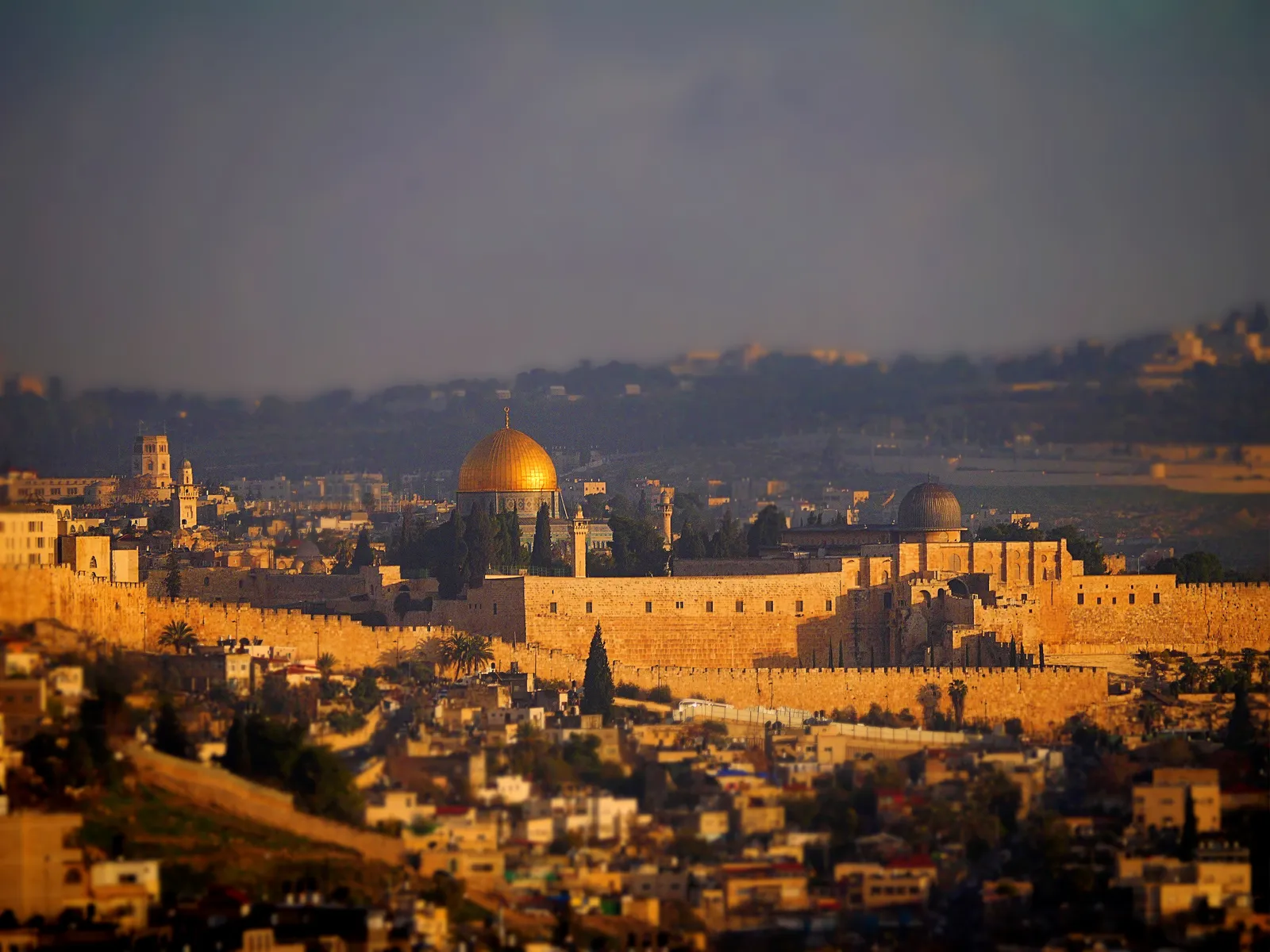
Photo: joiseyshowaa, CC BY-SA 2.0, via Wikimedia Commons
The best times for dua to be accepted, from authentic hadith only: the last third of the night, between adhan and iqama, sujood, and Friday's hour.
Search for the best times for dua to be accepted and you will find lists of twenty, thirty, sometimes forty moments, most with no hadith number and no grading. Strip those down to what is actually established in the Quran and the authentic hadith, and a shorter list remains. It is also a more usable one. This guide gives each time with its source (book and hadith number), notes the grading wherever the hadith is outside Bukhari and Muslim, and says plainly what the texts do not claim. That includes a question many people ask about Al-Aqsa.
Best times for dua to be accepted at a glance
Short answer: the times established by authentic texts are the last third of the night, between the adhan and the iqama, sujood, the end of the prayer before the salam, and the hour on Friday. Acceptance is also hoped for in the dua of the oppressed, the traveller and the parent. None of the texts guarantees a particular outcome; the answer is Allah's.
Last third of the night
"Who calls upon Me, that I may answer him?"
Bukhari 1145, Muslim 758
Between adhan and iqama
"Dua is not rejected between the adhan and the iqama."
Abu Dawud 521, Tirmidhi 212 (sahih per al-Albani)
Sujood
"The closest a servant is to his Lord is in prostration."
Muslim 482
End of prayer, before salam
"Then choose whatever supplication he likes."
Bukhari 835
Friday's hour
An hour in which a Muslim asking Allah is given what he asks
Bukhari 935, Muslim 852
The oppressed
"There is no veil between it and Allah."
Bukhari 2448, Muslim 19
The traveller and the parent
"Three duas are answered without doubt."
Abu Dawud 1536 (hasan per al-Albani)
| Time or situation | What the text says | Source |
|---|---|---|
| Last third of the night | "Who calls upon Me, that I may answer him?" | Bukhari 1145, Muslim 758 |
| Between adhan and iqama | "Dua is not rejected between the adhan and the iqama." | Abu Dawud 521, Tirmidhi 212 (sahih per al-Albani) |
| Sujood | "The closest a servant is to his Lord is in prostration." | Muslim 482 |
| End of prayer, before salam | "Then choose whatever supplication he likes." | Bukhari 835 |
| Friday's hour | An hour in which a Muslim asking Allah is given what he asks | Bukhari 935, Muslim 852 |
| The oppressed | "There is no veil between it and Allah." | Bukhari 2448, Muslim 19 |
| The traveller and the parent | "Three duas are answered without doubt." | Abu Dawud 1536 (hasan per al-Albani) |
Best times for dua to be accepted: start with the rule
Before the times, the rule. Nothing in the texts makes dua conditional on a clock. Allah says:
"When My servants ask you about Me, I am near. I answer the call of the caller when he calls upon Me." (Quran 2:186)
"Your Lord says: Call upon Me, I will respond to you." (Quran 40:60)
The times below are moments when acceptance is especially hoped for. They are not the only moments. Missing one of them does not close the door. For general manners of dua, see the etiquette of dua and the benefits of dua.
The last third of the night
This is the best known of the best times for dua to be accepted, and the report is agreed upon. Abu Hurayrah reported that the Prophet ﷺ said:
"Our Lord, blessed and exalted, descends every night to the lowest heaven when the last third of the night remains, and says: Who calls upon Me, that I may answer him? Who asks Me, that I may give him? Who seeks My forgiveness, that I may forgive him?"
Sahih al-Bukhari 1145; Sahih Muslim 758
Muslim also records from Jabir that the Prophet ﷺ said there is an hour every night in which a Muslim who asks Allah for good in this world and the next is given it (Sahih Muslim 757). The descent is affirmed as reported, in a manner that suits Allah's majesty, without asking how.
How do you find the last third? The night runs from sunset (Maghrib) to Fajr. As an illustration with made-up numbers: if Maghrib is at 5:30 pm and Fajr at 5:00 am, the night is 11.5 hours, a third of that is about 3 hours 50 minutes, and the last third begins around 1:10 am. The real figures change with the season and the city, so use your local prayer timetable. If a full night prayer is out of reach, waking shortly before Fajr for wudu, two rakat and a short dua still falls inside this window.
Between the adhan and the iqama
It is short, it comes five times a day, and it is usually lost to a phone screen. Anas reported that the Prophet ﷺ said:
"Dua is not rejected between the adhan and the iqama."
Sunan Abi Dawud 521; Jami at-Tirmidhi 212. Tirmidhi called it hasan; al-Albani graded it sahih.
No late night and no preparation needed. After repeating the adhan, the gap before the iqama is enough for a brief dua.
In sujood and before the salam
The instruction here could not be more direct:
"The closest a servant is to his Lord is when he is in prostration, so increase your dua."
Sahih Muslim 482 (Abu Hurayrah)
There is a second place inside the prayer. After teaching the companions the tashahhud, the Prophet ﷺ said that the one praying should then "choose whatever supplication he likes and make it" (Sahih al-Bukhari 835, from Ibn Mas'ud). So every prayer, obligatory or voluntary, carries two openings for dua.
Friday's hour
The authentic reports agree that Friday contains an hour of acceptance:
"In it there is an hour in which no Muslim servant stands in prayer asking Allah for something except that He gives it to him."
Sahih al-Bukhari 935; Sahih Muslim 852 (Abu Hurayrah)
Which hour it is, the authentic reports do not settle in one wording, and each has support:
Abu Musa al-Ash'ari reported that it is "between the imam sitting down until the prayer is finished" (Sahih Muslim 853).
Jabir reported: "Seek it in the last hour after Asr" (Sunan Abi Dawud 1048, graded sahih by al-Albani).
The careful approach is to hold on to both: dua during the khutbah and prayer in a way that does not distract from listening, and a quiet sitting in the last hour before Maghrib.
Conditions that favour acceptance
Some texts tie acceptance to the person making the dua, not the hour:
The oppressed. The Prophet ﷺ told Mu'adh when sending him to Yemen: "Beware the dua of the oppressed, for there is no veil between it and Allah" (Sahih al-Bukhari 2448; Sahih Muslim 19).
The traveller, the oppressed and the parent. "Three duas are answered without doubt: the dua of the parent, the dua of the traveller, and the dua of the oppressed" (Sunan Abi Dawud 1536, graded hasan by al-Albani; Tirmidhi 1905 has "the dua of the parent against his child" and al-Albani graded it hasan too).
In practice that makes even a short work trip a moment for dua. The last report is also a reminder to parents to choose their words, so that no dua against a child escapes in a moment of anger.
What holds acceptance back
The texts do not list the times apart from the conditions. They put them together.
Haram earnings. The Prophet ﷺ mentioned a man on a long journey, dishevelled and dusty, raising his hands to the sky saying "O Lord, O Lord", "while his food is haram, his drink is haram, his clothing is haram, and he was nourished on the haram, so how can his dua be answered?" (Sahih Muslim 1015). The hadith does not say such a dua is certainly rejected. It says acceptance is far from that state, which is warning enough.
Impatience. "The dua of any of you is answered as long as he does not grow impatient, saying: I made dua and it was not answered" (Sahih al-Bukhari 6340; Sahih Muslim 2735). Someone who prays in the last third for three nights and then stops because nothing changed has done exactly what this hadith warns about. More on persistence in how to ask for dua.
None of the texts quoted here attaches a guarantee of a particular outcome. What is answered and in what form is with Allah.
Is there a special rule for dua at Al-Aqsa?
People ask this often, and the answer needs precision. What is established about Al-Aqsa:
It is named in the Quran: "Glory to Him who took His servant by night from al-Masjid al-Haram to al-Masjid al-Aqsa, whose surroundings We have blessed" (Quran 17:1).
It is one of the three mosques to which journeys are undertaken: "Do not set out on a journey except to three mosques: al-Masjid al-Haram, the mosque of the Messenger ﷺ, and al-Masjid al-Aqsa" (Sahih al-Bukhari 1189; Sahih Muslim 1397).
Abdullah ibn Amr reported that when Sulayman (peace be upon him) finished building Bayt al-Maqdis he asked Allah for three things, one being that whoever comes to the mosque with no purpose except to pray in it would leave free of sin "as on the day his mother bore him" (Sunan an-Nasa'i 693, graded sahih by al-Albani).
We did not find an authentic text that makes dua at Al-Aqsa answered faster by a set measure, or that guarantees an answer there. The multiplication of prayer in the mosque by a specific number rests on narrations that scholars disagree about, so we give no number. Its standing is firm. The times in this article apply wherever the person is. For more on that standing, see why Al-Aqsa matters.
Making dua for someone in their absence
One text bridges everything above and the situation of someone who cannot be at a particular place. Umm ad-Darda reported that the Prophet ﷺ said:
"The dua of a Muslim for his brother in his absence is answered. At his head is an appointed angel; whenever he makes dua for good for his brother, the angel says: Ameen, and the same for you."
Sahih Muslim 2733
And the report of Uways al-Qarani shows that asking another person for dua is legitimate. Umar reported that the Prophet ﷺ said of Uways: "If he is able to seek forgiveness for you, then do so," so Umar asked him: "Seek forgiveness for me" (Sahih Muslim 2542).
That is the idea behind Al-Aqsa Blessings: a personal dua made for you by name, recorded on video at Al-Aqsa and sent to your inbox within 48 to 72 hours, starting at $29.90 for one dua. It is a dua made for you by name. It does not replace your own dua at the times above, and it makes no promise of an outcome, because the answer is Allah's alone. If you want to pray for a sick relative, for provision or for family, see also dua for health, dua for rizq and dua for family. More detail: asking for dua at Al-Aqsa on someone's behalf.
A simple plan for an ordinary week
You do not need every time at once. This is enough:
Every prayer: dua in the last sujood and before the salam.
At least once a day: two minutes between the adhan and the iqama of any prayer.
Two or three nights a week: two rakat in the last third, then dua.
Friday: dua during the khutbah and prayer, and a short sitting before Maghrib.
With every dua: short, clear words, name the need, and do not close the door after the first try.
Sources
Quran: 2:186, 40:60, 17:1.
Sahih al-Bukhari: 835, 935, 1145, 1189, 2448, 6340.
Sahih Muslim: 19, 482, 757, 758, 852, 853, 1015, 1397, 2542, 2733, 2735.
Sunan Abi Dawud: 521, 1048, 1536 (al-Albani: sahih, sahih, hasan).
Jami at-Tirmidhi: 212 (hasan per Tirmidhi, sahih per al-Albani), 1905 (hasan per al-Albani).
Sunan an-Nasa'i: 693 (sahih per al-Albani).
Each hadith can be checked by its number on sunnah.com or Dorar.net. Sources reviewed on 23 October 2026.
Frequently asked questions
What are the best times for dua to be accepted?
The ones with authentic texts are the last third of the night (Bukhari 1145, Muslim 758), between the adhan and the iqama (Abu Dawud 521, graded sahih by al-Albani), sujood (Muslim 482), and the hour on Friday (Bukhari 935, Muslim 852).
When is the hour of acceptance on Friday?
Two authentic reports exist: from when the imam sits until the prayer ends (Muslim 853), and the last hour after Asr (Abu Dawud 1048, graded sahih by al-Albani). Holding to both is the safer course.
How do I work out the last third of the night?
Divide the time from sunset to Fajr into three. The last third is the final part. It changes with season and city, so check your local prayer timetable.
Is dua at Al-Aqsa answered faster?
As far as we found, no authentic text guarantees that or gives it a measure. What is established is that Al-Aqsa is one of the three mosques to which journeys are made (Bukhari 1189, Muslim 1397), and that the times in this article apply anywhere.
Can someone make dua for another person by name?
Yes. Sahih Muslim 2733: "The dua of a Muslim for his brother in his absence is answered." In Muslim 2542, Umar asked Uways al-Qarani to seek forgiveness for him on the Prophet's ﷺ guidance.
Why are some duas not answered?
The texts mention haram earnings (Muslim 1015) and impatience (Bukhari 6340; Muslim 2735). An answer may also come in a form other than the one requested, and Allah knows best.
Would you like a personal du'a made for you by name at Al-Aqsa?
The du'a is made by name at Al-Aqsa Mosque, and the video usually arrives by email within 48-72 hours.
Request your du'a